

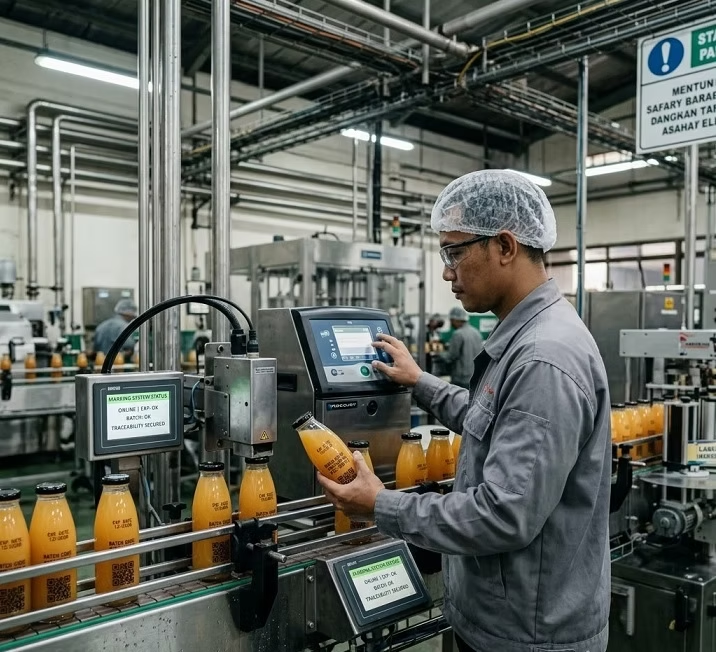
The Importance of Marking Systems in Maintaining Product Safety
In the modern manufacturing industry, product safety is one aspect that cannot be ignored. It is not only related to product quality, but also concerns consumer trust, regulatory compliance, and company reputation.
One important element in maintaining product safety is the marking system on packaging. Information such as production date, expiry date, batch number, and other identification codes plays a crucial role in ensuring every product can be traced and controlled properly.
Without the right marking system, the risk of production errors, distribution errors, and product recalls can increase significantly.
What Is a Marking System on Packaging?
A marking system is the process of printing or marking certain information on products or packaging using special technology. This information usually includes:
- Production and expiry dates
- Batch or lot number
- Production code
- Barcode or QR code
- Other identification information
Marking is carried out automatically on the production line using coding and marking machines, so every product has a unique and consistent identity.
Why Is a Marking System Very Important?
1. Ensuring Product Safety
Marking allows manufacturers to ensure that products circulating in the market are still safe to consume or use.
Information such as expiry dates helps consumers know the safe usage limit of the product.
2. Supporting Traceability
In industry, the ability to track products is very important. If a problem occurs, companies must be able to identify:
- When the product was produced
- Which batch the product came from
- Where the product was distributed
Without a marking system, this process will become very difficult.
3. Meeting Regulations and Industry Standards
Many industries such as food, beverage, and pharmaceuticals have strict regulations regarding labeling and marking.
Products that do not meet these standards can:
- Be withdrawn from the market
- Fail audits
- Be subject to legal sanctions
4. Increasing Consumer Trust
Consumers tend to trust products more when they have complete and clear information.
Neat and clearly readable marking gives a professional impression and increases brand credibility.
Risks If the Marking System Is Not Optimal
Failure in the marking system can create various serious risks for businesses, including:
1. Product Distribution Errors
Without clear codes, products can be sent incorrectly or mixed with other batches.
2. Difficulty Performing Product Recalls
If a quality problem occurs, the company must withdraw products from the market. Without clear marking, this process becomes slow and ineffective.
3. Potential Regulatory Violations
Products without appropriate information can violate regulations and result in sanctions.
4. Decline in Market Trust
Small mistakes in marking can have a major impact on brand reputation.
Technologies in Marking Systems
To ensure marking quality, industries use various modern technologies, including:
1. Continuous Inkjet (CIJ)
This technology is suitable for high-speed production lines and various types of materials.
2. Thermal Inkjet (TIJ)
Provides sharp print results and is often used for carton packaging or labels.
3. Laser Marking
Uses laser to produce permanent marking without ink. Suitable for long-term needs and minimal maintenance.
4. Thermal Transfer Overprinter (TTO)
Used for flexible packaging such as plastic and film.
Choosing the right technology is very important to ensure marking results match industrial needs.
Factors to Consider in a Marking System
To make the marking system run optimally, several things need to be considered:
- Print quality must be clear and easy to read
- Marking durability against environmental conditions
- Machine speed must match the production line
- Print result consistency
- Ease of maintenance
Mistakes in choosing a system can affect production efficiency and product quality.
The Role of Marking Systems in Operational Efficiency
In addition to safety aspects, marking systems also contribute to operational efficiency.
With an integrated system:
- The production process becomes more controlled
- Manual errors can be minimized
- Production data can be documented properly
This helps companies improve productivity while maintaining quality.
Marking Solutions for Modern Industry
In choosing a marking system, companies do not only need machines, but also solutions that match production needs.
Therefore, it is important to choose a provider that understands industrial needs comprehensively. One coding and marking solution provider that can be considered is Agaprima.
Agaprima offers various marking technologies that can be adjusted to industrial needs, from small scale to large production. With technical support and the right technology selection, companies can ensure the marking system runs optimally and supports product safety.
Conclusion
The marking system on packaging is not just an additional element, but an important part of maintaining product safety, meeting regulations, and increasing consumer trust.
With the right marking system, companies can control quality, improve operational efficiency, and minimize risks in the production and distribution process.
In the increasingly competitive modern industrial era, investing in a reliable marking system is no longer an option, but a necessity to maintain business sustainability and company reputation.